


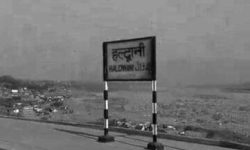
History and Growth of Haldwani City – The Gateway of Kumaon
Haldwani City, famously known as the Gateway of Kumaon, holds a rich cultural and historical significance in Uttarakhand. Earlier, the town was known as Haldu-Vani, derived from the Haldu tree (Adina cordifolia), which grew abundantly in the region before large-scale deforestation for agriculture and settlement.
On 8 November 2000, Uttarakhand was carved out of Uttar Pradesh, and since then Haldwani (district Nainital) has become one of the major cities of the state. The first Chief Minister of Uttarakhand was Shri Nityanand Swami, who assumed office in November 2001. Today, Haldwani City is the largest commercial hub of Kumaon and the second most populous city of Uttarakhand.
Expansion of Haldwani City
Due to rapid growth in population, Haldwani has expanded into several suburban areas, including:
-
Kusumkhera
-
Uncha Pul
-
Bithoria
-
Damuadhunga
-
Bhotia Parao
-
Kathgharia
-
Fatehpur
-
Daharia
-
Gaujajali
-
Lamachaur
These suburban regions have transformed Haldwani City into a sprawling urban center that continues to grow as a commercial and residential hub.
Educational and Healthcare Institutions in Haldwani
The region around Haldwani is notable for its academic and medical institutions. The prestigious Govind Ballabh Pant University of Agriculture and Technology, Pantnagar (GBPUAT) lies nearby, along with SIDCUL, a major industrial area.
In the field of healthcare, the Sushila Tiwari Memorial Hospital (STMH), established under the Uttarakhand Forest Hospital Trust (UFHT), has become one of the leading medical institutions of Kumaon.
Haldwani City is also home to several reputed schools, offering high-quality pre-college education. Unlike the expensive hill schools of Uttarakhand, Haldwani’s schools provide excellent learning opportunities at affordable costs, attracting students from across the region.
Haldwani in History
In 1816, after the British defeated the Gorkhas, Gardner was appointed as the Commissioner of Kumaon. Later, George William Trail took charge and officially renamed Halduvani to Haldwani in 1834.
Although British records suggest Haldwani was formally established as a marketplace for the hill people in 1834, its history stretches further back. Mughal historians mention that in the 14th century, Gyan Chand of the Chand Dynasty visited the Delhi Sultanate and received the Bhabhar-Terai region as a grant. The Mughals later attempted to expand into the hills, but their campaigns were unsuccessful due to the difficult terrain.
During the Indian Rebellion of 1857, Haldwani briefly came under the control of Rohilkhand rebels. However, Sir Henry Ramsay, the Commissioner of Kumaon from 1856, soon restored British authority and introduced martial law to stabilize the region.
Rail and Road Development in Haldwani
Under British rule, Haldwani City began to grow rapidly. Sir Henry Ramsay built a road connecting Nainital with Kathgodam in 1882. Soon after, in 1883-84, the railway line between Bareilly and Kathgodam was laid. The first train arrived at Haldwani on 24 April 1884 from Lucknow, marking a turning point in the city’s development. Later, the railway was extended up to Kathgodam, making it the last railhead of Kumaon.
This connectivity transformed Haldwani into a thriving market town, linking the Kumaon hills with the plains of North India.
Haldwani in the Early 20th Century
By 1901, the population of Haldwani had reached 6,624. The town served as the headquarters of the Bhabhar region in Nainital District, and also functioned as the winter headquarters for officers of Kumaon Division.
Key milestones of the early 20th century in Haldwani City:
-
1899 – Tehsil office established, making Haldwani the Tehsil headquarters of Bhabhar.
-
1901 – Arya Samaj Bhavan constructed.
-
1902 – Sanatan Dharm Sabha established.
-
1904 – Declared a notified area.
-
1907 – Received town area status.
At that time, Haldwani Tehsil included 4 towns and 511 villages with a combined population of 93,445 across 1,279 square miles.
British Influence and Military Presence
Just 4 km south of the city lies Gora Padao, named after a British military post established in the mid-1800s. “Gora,” a colloquial term for the British, reflects the colonial presence that influenced Haldwani’s history and development.
Haldwani in Modern Times
The Haldwani-Kathgodam Municipal Council was established on 21 September 1942, making it one of the oldest civic bodies in Uttarakhand. Today, it is the second-largest municipal council in the state, after Haridwar.
Modern Haldwani City has evolved into the financial capital of Uttarakhand, balancing its historical legacy with rapid urbanization. With its strong commercial base, educational institutions, healthcare facilities, and proximity to tourist destinations like Nainital, Bhimtal, Mukteshwar, and Jim Corbett National Park, Haldwani continues to grow as a dynamic city in the Kumaon region.
Conclusion
From its origins as Haldu-Vani, named after the Haldu tree, to becoming the Gateway of Kumaon, Haldwani City has a rich legacy shaped by culture, history, and commerce. The arrival of the British, the development of railway and road networks, and the establishment of educational and medical institutions have all contributed to Haldwani’s rise as the second-largest city in Uttarakhand.
Today, Haldwani is not just a commercial hub but also a center of education, healthcare, and cultural diversity. With its rapid expansion into suburban areas, growing population, and strong connectivity, Haldwani City continues to play a pivotal role in the growth and development of Uttarakhand.